Product Description

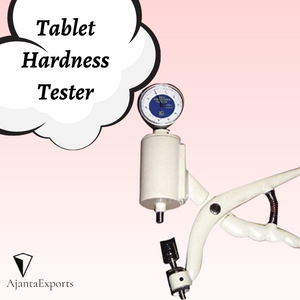
Tablet Hardness Tester
A handy, tough, and direct dial reading type tablet hardness tester, working as pair of players, generate breaking force in a single grip. The instrument offers accurate and reproducible results much faster than other conventional hardness testers. Colour may be different at the time of availability. Another important aspect of tablet hardness testers is the display and analysis of test results.
Tablet hardness testers are essential tools used in the pharmaceutical industry for quality control purposes. These instruments measure the resistance of a tablet to fracture under a given compression force. By measuring tablet hardness, manufacturers can ensure that tablets are consistent in terms of strength, durability, and disintegration time, which are all critical factors in determining a tablet’s effectiveness.
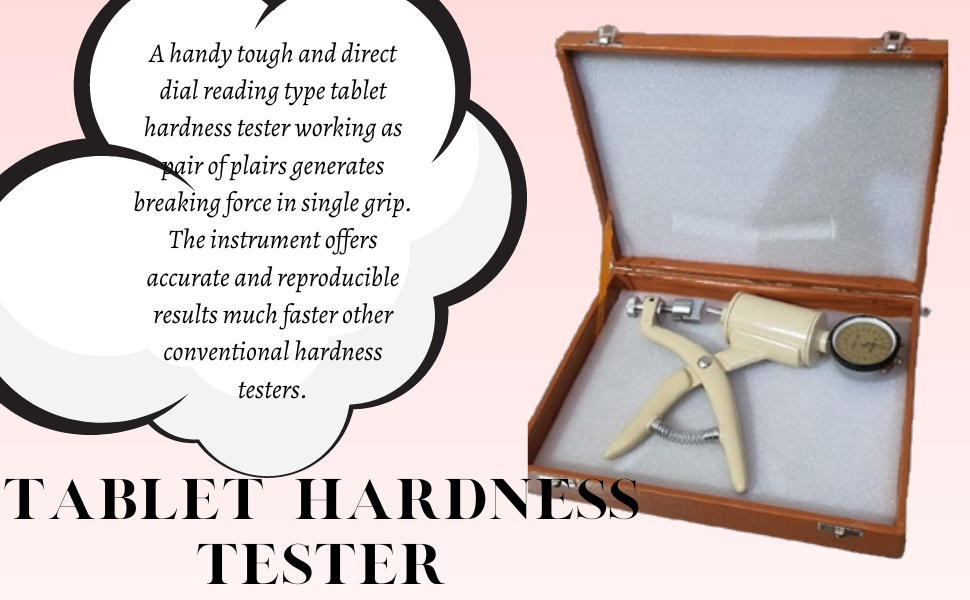
Tablet Hardness Tester
Tablet hardness testers come in different types, including manual, semi-automatic, and fully automatic. The manual type is the simplest and most economical option and is ideal for small-scale manufacturing or research and development purposes. Semi-automatic and fully automatic hardness testers, on the other hand, are suitable for high-volume production environments.
One of the critical features of a tablet hardness tester is the force applied during the testing process. The force required to break a tablet can vary, depending on factors such as the tablet’s size, shape, and composition. Therefore, the tester must be capable of applying a range of forces to determine the tablet’s hardness accurately. This is achieved using a load cell that measures the compression force applied to the tablet.
Hardness Tester
making it easier for operators to monitor and adjust the testing process accordingly. The results are typically displayed in units of force, such as Newtons or pounds, and can be recorded and stored for future reference. In addition to measuring tablet hardness, some hardness testers can also perform other tests, such as friability testing, which measures the tablet’s resistance to abrasion and breakage during handling and transportation.
Precise Hardness Measurement: Accurately measures the hardness of tablets, ensuring consistent quality control in pharmaceutical production.
Robust Construction: Sturdy construction with high-quality materials for durability and longevity, ensuring reliable performance in demanding production environments.
Easy Maintenance: Designed for easy maintenance and calibration, minimizing downtime and ensuring accurate measurements over time.
Compact Design: Space-saving and ergonomic design for efficient use of laboratory space and ease of handling.
Compliance with Standards: Meets relevant industry standards and regulations for pharmaceutical quality control, providing assurance of accuracy and reliability in hardness testing.

